2026-10-19 ·
Choosing Materials That Resist Mold In Mount Juliet Bathrooms
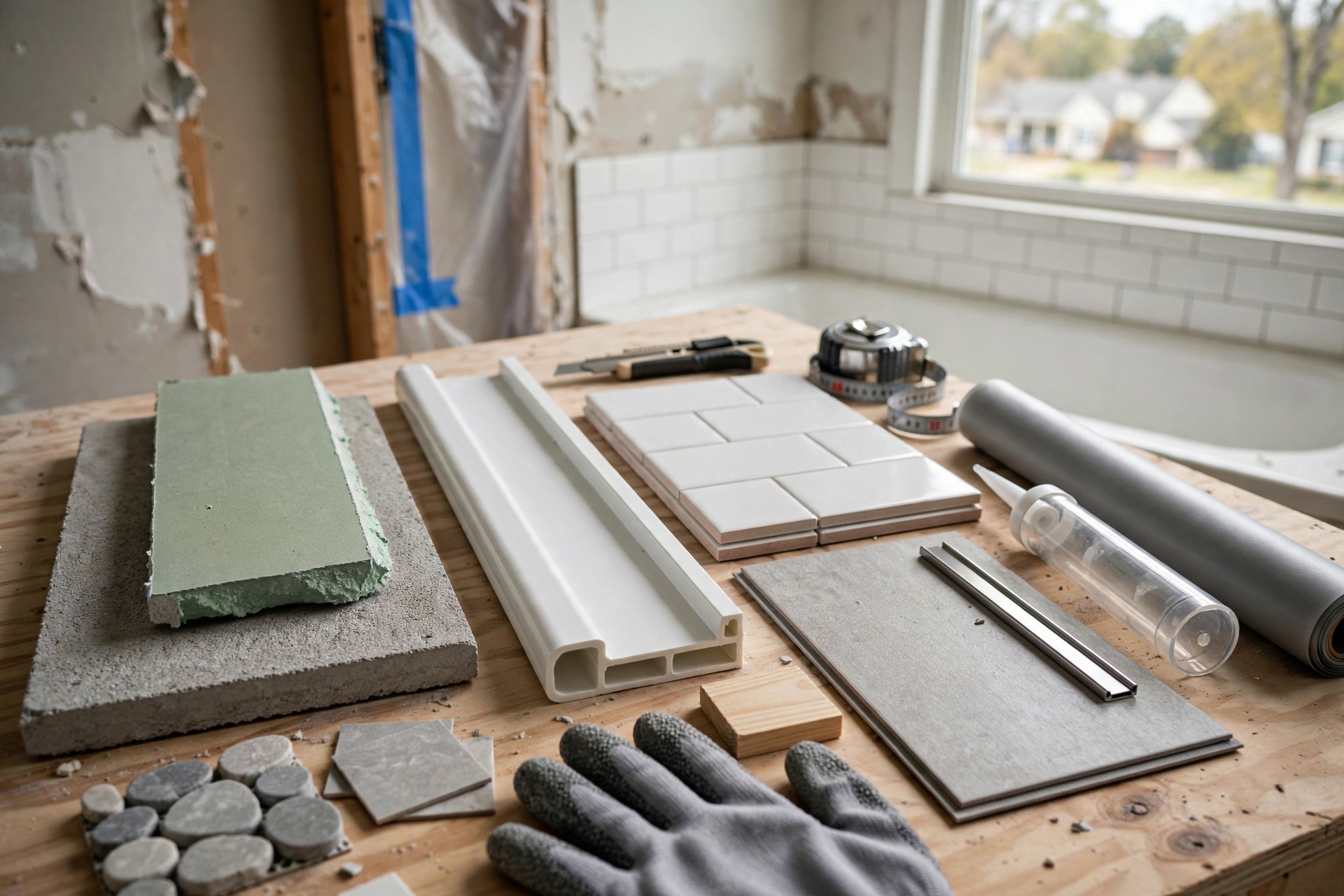
In Mount Juliet bathrooms, switching to cement board backing and epoxy grout adds 15–20 years to shower surround durability compared with paper-faced drywall and cementitious grout. The area's humid subtropical climate brings frequent summer humidity spikes that push indoor moisture levels above 60 percent for weeks at a time, allowing mold to colonize standard materials within 48 hours of a leak. Homes in Providence and Beckwith subdivisions often feature 2,000–3,000 square foot layouts with bathrooms positioned over crawl spaces that stay damp year-round, making material choice critical from the start.
Climate and Housing Factors in Wilson County
Mount Juliet sits in Wilson County between Nashville and Lebanon, where mild winters still allow condensation on cooler bathroom surfaces during temperature swings of 30 degrees in a single day. Many homes built after 2000 in Providence use fiberglass tubs surrounded by drywall that absorbs water from shower steam and leaks at the base. Hot summers push outdoor humidity above 80 percent, driving residents to run air conditioning less consistently and leaving bathroom walls damp longer. These conditions favor backer boards that do not contain organic paper facing and sealants that block vapor transmission at joints. Local terrain includes rolling hills that direct rainwater toward foundations, increasing crawl-space moisture that migrates upward into first-floor bathrooms. Choosing materials rated for continuous 100 percent humidity exposure prevents the repeated remediation cycles seen in nearby neighborhoods after heavy spring rains.
Cement Board and Tile Backing Choices
Cement board such as 1/2-inch thick sheets provides a stable substrate that withstands repeated wetting without swelling or feeding mold. Installers in Beckwith homes typically fasten these boards with 1-1/4 inch coarse-thread screws spaced 8 inches on center, then apply a waterproofing membrane over seams and screw heads. This assembly resists the steam generated by daily showers in 5-by-8-foot bathrooms common to Providence floor plans. Standard drywall fails here because its gypsum core softens and its paper facing supports mold growth once moisture exceeds 15 percent content. Fiberglass-faced gypsum boards offer a lighter alternative but still require full waterproofing coverage to match cement board performance over 10-year periods. Homeowners should verify that the chosen board carries a 30-year limited warranty against mold when installed per manufacturer instructions in Wilson County humidity levels.
Grout, Caulk, and Sealant Performance
Epoxy grout resists staining and moisture absorption better than cement-based grout, maintaining joint integrity for 8–12 years in Mount Juliet showers before reapplication becomes necessary. Its non-porous surface prevents water from reaching the setting bed, a common failure point when cementitious grout cracks from seasonal expansion. Silicone or urethane caulk at tub-to-wall and corner joints should be replaced every 3–5 years because ultraviolet light from bathroom windows and cleaning chemicals degrade flexibility. Pre-mixed urethane grouts eliminate on-site mixing dust and provide consistent color in small bathrooms where matching becomes visible. These products perform best when applied after the tile has cured for 48 hours, allowing full adhesive set before exposure to the high humidity typical of summer months in the area.
Flooring, Vanities, and Ventilation Integration
Porcelain tile on floors with a 0.5 percent slope to the drain moves water away faster than vinyl in homes near Charlie Daniels Park where morning dew adds extra moisture through open windows. Solid-surface vanity tops with integrated sinks eliminate the seams that trap water under laminate edges. Exhaust fans rated at 80–100 CFM, vented directly to the exterior rather than attics, remove 90 percent of shower steam within 15 minutes when run for 20 minutes after each use. Linking this ventilation to a humidity-sensing switch ensures operation during the mild winter periods when residents close windows and indoor moisture builds. Readers dealing with existing growth can review bathroom mold removal steps or explore moisture control after mold removal for follow-up protection. Cost considerations appear in the article Cost Factors For Mold Remediation In Mount Juliet Homes.
Practical Installation Sequence for Local Homes
Begin by removing existing drywall to 12 inches above the highest water line, then install cement board on walls and a waterproof membrane to 6 inches up the wall behind the tub. Tape all joints with alkali-resistant mesh tape embedded in thin-set mortar before applying the final waterproof coating. Set tile with a latex-modified thin-set rated for wet areas, leaving 1/8-inch grout joints filled completely with epoxy. Run the exhaust fan during and after installation to keep humidity below 50 percent while adhesives cure. Schedule final inspection with a moisture meter to confirm wall content stays under 12 percent before homeowners resume normal shower use. This sequence has proven effective in Providence homes where previous drywall installations failed within five years of occupancy.