2026-10-19 ·
Mold Remediation After Summer Storms In Mount Juliet
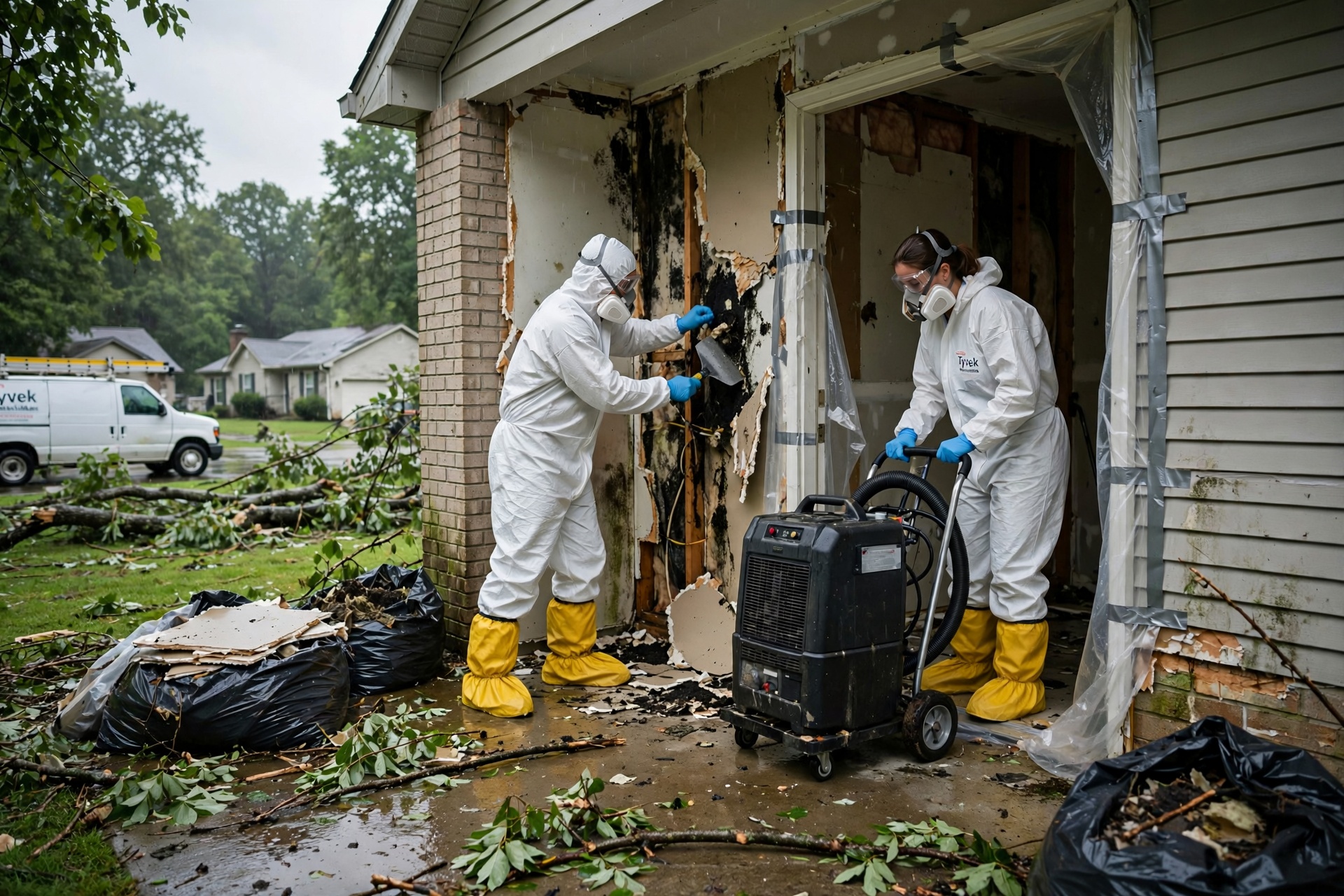
After summer storms hit Mount Juliet, mold remediation should start within 24-48 hours to stop spores from spreading through humid air. The region's hot summers and mild winters allow moisture from heavy rainfall to linger in attics, basements, and crawl spaces, especially in older housing stock common throughout Wilson County. Homes in Providence and Beckwith often see water intrusion around windows and foundations after intense downpours, leading to hidden growth that requires professional removal.
How Summer Storms Create Mold Risks in Mount Juliet
Mount Juliet's humid subtropical climate brings frequent summer thunderstorms that drop several inches of rain in short bursts. This volume overwhelms gutters and grading around homes built on the area's rolling terrain, pushing water into crawl spaces and wall cavities. Properties near Providence Marketplace experience additional runoff issues from nearby commercial paving. In Beckwith, older single-story homes with slab foundations trap moisture longer because of poor airflow. These conditions accelerate mold on drywall and insulation within days. Post-water-damage mold remediation addresses exactly these storm-related intrusions by drying and removing affected materials before spores colonize HVAC systems. Local operators note that homes within 15 miles of Nashville see similar patterns but benefit from slightly better drainage than more rural Wilson County pockets.
Affected Areas and Inspection Priorities
Focus first on attics and bathrooms where storm-driven wind forces rain past flashing. In Providence neighborhoods, vaulted ceilings hide growth along roof decking after wind-driven rain events. Beckwith homes with attached garages often develop mold on shared walls when downspouts empty too close to foundations. Wilson County's clay-heavy soils hold water against basement walls for weeks. A thorough inspection checks every level, including closets and HVAC returns, because spores travel through ductwork. Mold remediation crews use moisture meters to map hidden saturation that visual checks miss. Readers facing roof leaks should review when to call for mold testing after a Mount Juliet roof leak to understand timing before growth becomes extensive.
Remediation Steps Grounded in Local Conditions
Begin by isolating the work area with containment to protect unaffected rooms from cross-contamination. Remove standing water and wet materials, then apply HEPA filtration during demolition of mold-damaged drywall. In Mount Juliet's mild winters, crews can run dehumidifiers continuously without freeze concerns, speeding drying of joists and subfloors. For homes in Providence, extra attention goes to attic ventilation upgrades because summer heat builds humidity even after storms pass. Technicians document every step with photos for insurance claims common in Wilson County. The process typically concludes with antimicrobial treatment on exposed wood and a final clearance test. Local humidity levels and mold growth in Mount Juliet explains why re-testing remains necessary weeks later.
Preventing Recurrence After Storms
Install French drains around Beckwith foundations where water pools against slabs. Ensure downspouts extend at least six feet from the house to counter the area's frequent summer deluges. In Providence, attic fans help exhaust moisture before it condenses on sheathing. Schedule annual gutter cleaning before storm season to reduce overflow risks. 24/7 emergency service at 113 Bear Xing, Mount Juliet, TN 37122 allows quick response when leaks appear overnight. These steps keep mold from returning in the humid subtropical environment that defines Wilson County weather patterns.